
%20ADVISORY.png)
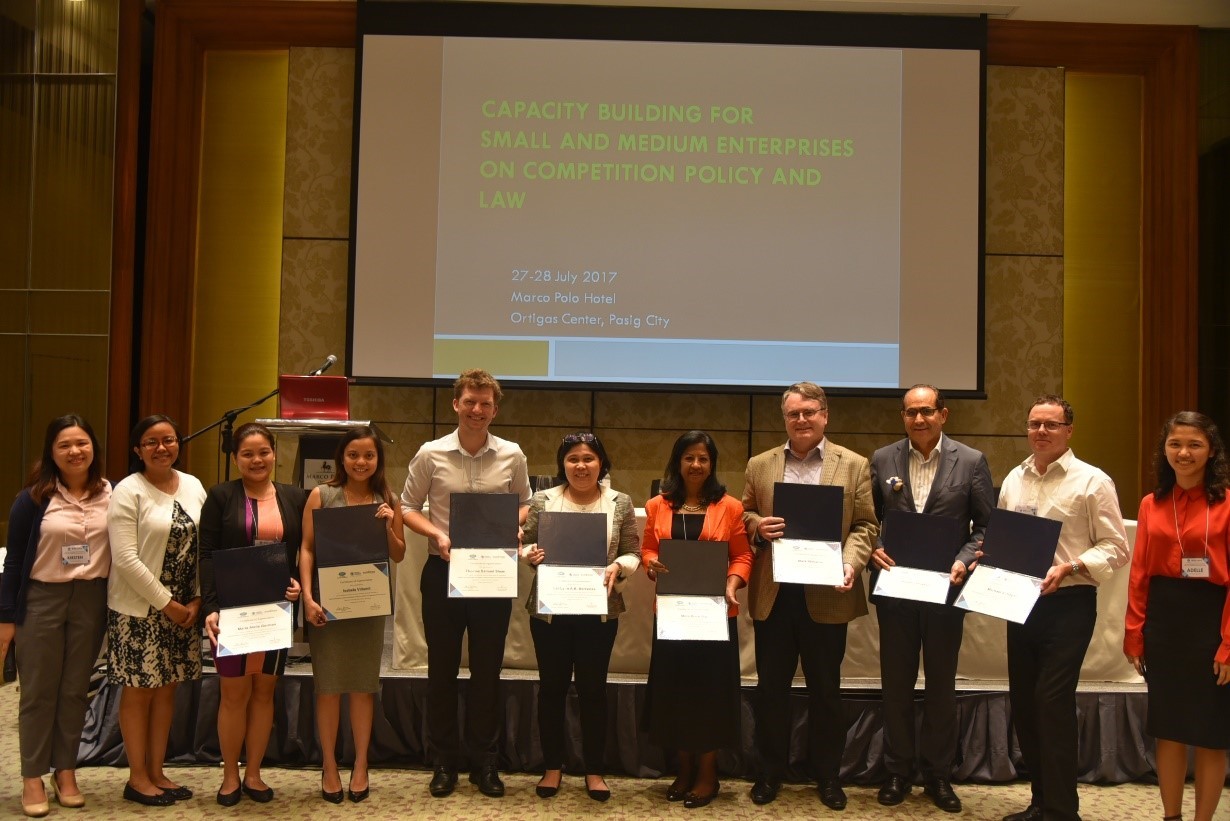
L-R: PCC STAFF KIRSTEN DELA CRUZ; PCC EXECUTIVE DIRECTOR GWEN DE VERA; DOJ-OFC ECONOMIST MARIA ALELIE GERMAN; PCC ECONOMICS OFFICE DIVISION CHIEF ISABELA VILLAMIL; SUSTINEO BUSINESS DEVELOPMENT AND RESEARCH MANAGER THOMAS SAMUEL SLOAN; PHILIPPINE COMPETITION LAW ADVISOR ATTY. LAI-LYN ANGELICA BARCENAS; FORMER MALAYSIA COMPETITION COMMISSION CHIEF EXECUTIVE OFFICER SHILA DORAI RAJ; UNIVERSITY OF MELBOURNE PROFESSOR OF LAW DR. MARK WILLIAMS; FORMER UNCTAD COMPETITION AND CONSUMER POLICIES BRANCH HEAD DR. HASSAN QAQAYA; ACCC DEPUTY CHAIRPERSON DR. MICHAEL SCHAPER; PCC STAFF MA. ADELLE ARBO
Micro, small, and medium enterprises (MSMEs) took center stage at the capacity building workshop organized by the Philippine Competition Commission (PCC) and sponsored by the Asia-Pacific Economic Cooperation (APEC) Secretariat. Held on July 27-28 in Ortigas Center, the main objective of the workshop is to craft an action plan that will better facilitate the entry and growth of MSMEs in the Philippine markets.
“We recognize that the growth potential of MSMEs can be maximized if they have a fair chance of succeeding alongside larger and more established foreign and domestic players,” said PCC Chairman Arsenio M. Balisacan during his opening remarks. “Competition policy aims to make the entry of new players and the expansion of existing businesses easier,” he added.
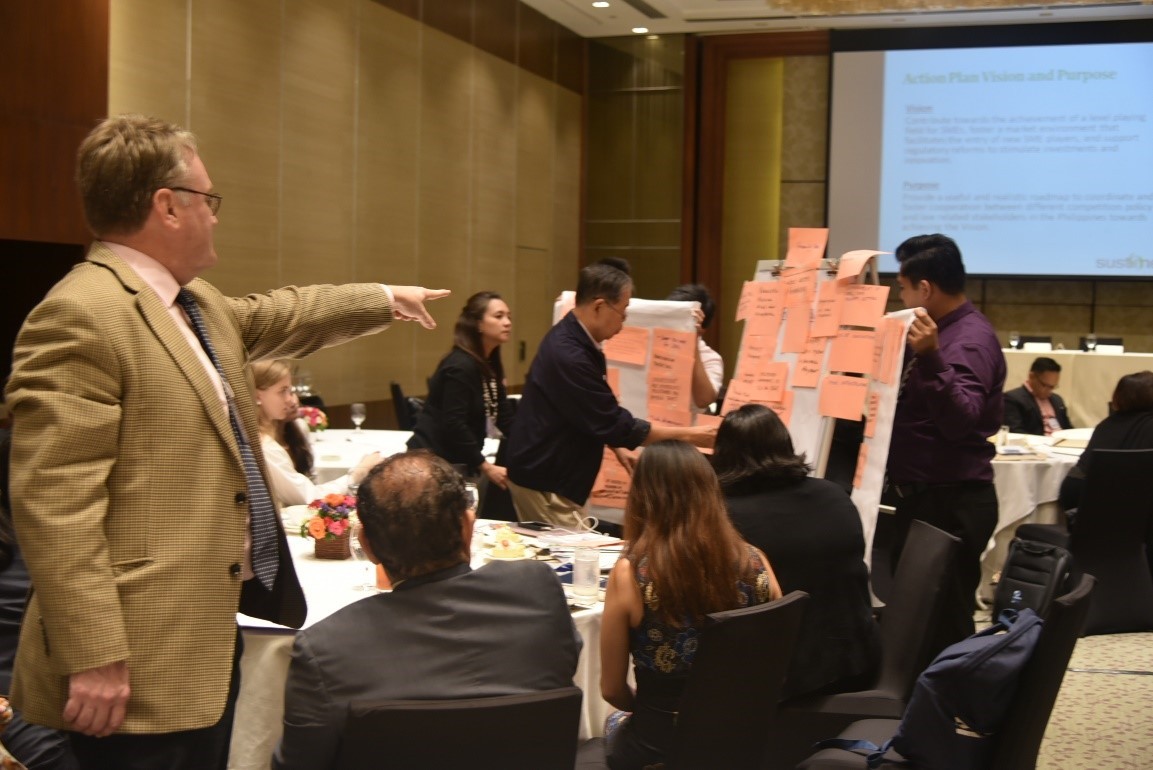
UNIVERSITY OF MELBOURNE PROFESSOR OF LAW DR. MARK WILLIAMS (LEFT) DURING ONE OF THE BREAKOUT SESSIONS OF THE WORKSHOP

PCC EXECUTIVE DIRECTOR GWEN DE VERA SYNTHESIZES THE WORKSHOP’S LEARNINGS AND POINTS FOR ACTION
Dr. Mark Williams, professor of law at University of Melbourne and consultant from Sustineo Pty Ltd., presented key issues confronting MSMEs, such as government regulations and competition restrictions, advocacy activities for MSMEs, enforcement priorities affecting MSMEs, and access to infrastructure and credit.
The two-day workshop is the culmination of the APEC SMEs project, which conducted baseline studies to benchmark SME issues in similar countries, and focus group discussions with key stakeholders to identify challenges experienced by Filipino MSMEs in doing business. Aside from MSMEs and MSME associations, the event was attended by international participants from APEC-member countries like Indonesia, Japan, Malaysia, Mexico, Papua New Guinea, Peru, Russia, Thailand, and Vietnam.
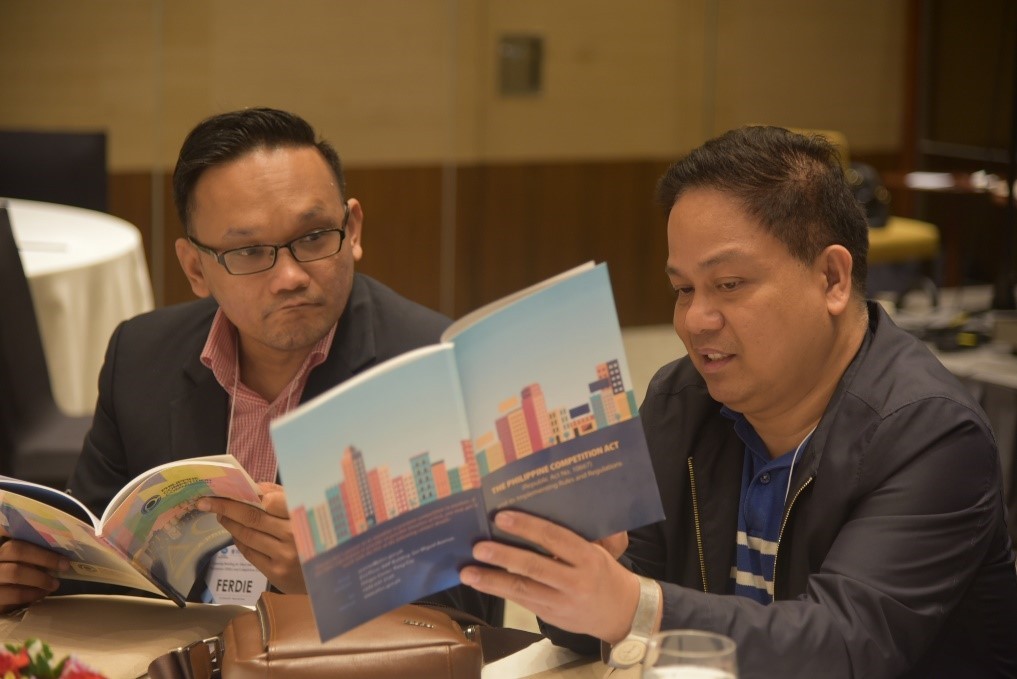
PCC COMPETITION ENFORCEMENT OFFICE ASSISTANT DIRECTOR FERDINAND B. REDULLA DISCUSSES THE PHILIPPINE COMPETITION ACT WITH ONE OF THE PARTICIPANTS

UNIVERSITY OF MELBOURNE PROFESSOR OF LAW DR. MARK WILLIAMS (LEFT) DURING ONE OF HIS PLENARY LECTURES DURING THE WORKSHOP
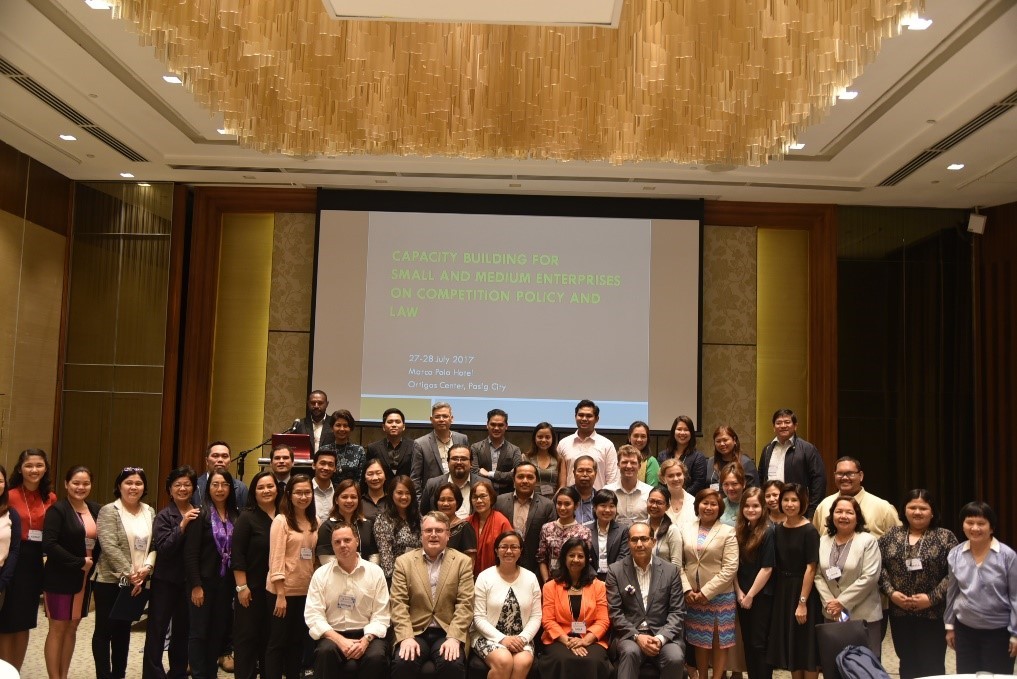
PCC EXECUTIVE DIRECTOR GWEN DE VERA (CENTER, FIRST ROW) WITH THE WORKSHOP’S SPEAKERS AND PARTICIPANTS
Former United Nations Conference on Trade and Development (UNCTAD) Competition and Consumer Policies head and Melbourne Law School senior fellow Dr. Hassan Qaqaya presented the preliminary findings of the survey on SME owners, senior managers, and representatives from 17 countries. He highlighted the need for competition authorities to work side-by-side with growth-oriented trade associations and MSMEs that support the role of competition agencies in maintaining competitive markets.
Meanwhile, Australian Competition and Consumer Commission (ACCC) Deputy Chair Dr. Michael Schaper presented the expectations of MSMEs from regulators, such as the PCC. Among those Dr. Schaper underscored include: (i) dealing reasonably with minor breaches, (ii) implementing laws that are easily understood, (iii) minimizing the role of the judiciary, (iv) resolving business disputes simply, (v) investigating complaints promptly, (vi) providing concise and easy-to-read guidance, (vii) emphasizing MSMEs’ rights, (viii) recognizing MSMEs’ size difference with respect to bigger players, and (ix) providing practical advice and assistance to help MSMEs comply.
Moreover, Malaysia Competition Commission’s (MyCC) former Chief Executive Officer Ms. Shila Dorai Raj narrated MyCC’s experiences in implementing competition policy and law for SMEs during their initial years. She recounted the failures of their advocacy activities (e.g., too technical briefings, many programs not welcomed by MSMEs) and enforcement (e.g. negative news reported by media). She suggested that advocacy activities should be comprehensive and practical that feature real case studies and illustrations, and should focus on their rights. Raj explained that this is because competition issues are not a priority for MSMEs. She encouraged regulators to frequently engage the MSME community and form a core group that will advocate and support the agency’s work.
The event was facilitated by Sustineo Pty Ltd., an Australian-based firm specializing in technical and management services to create positive and sustainable social economic change in Australia and across the Asia Pacific region.